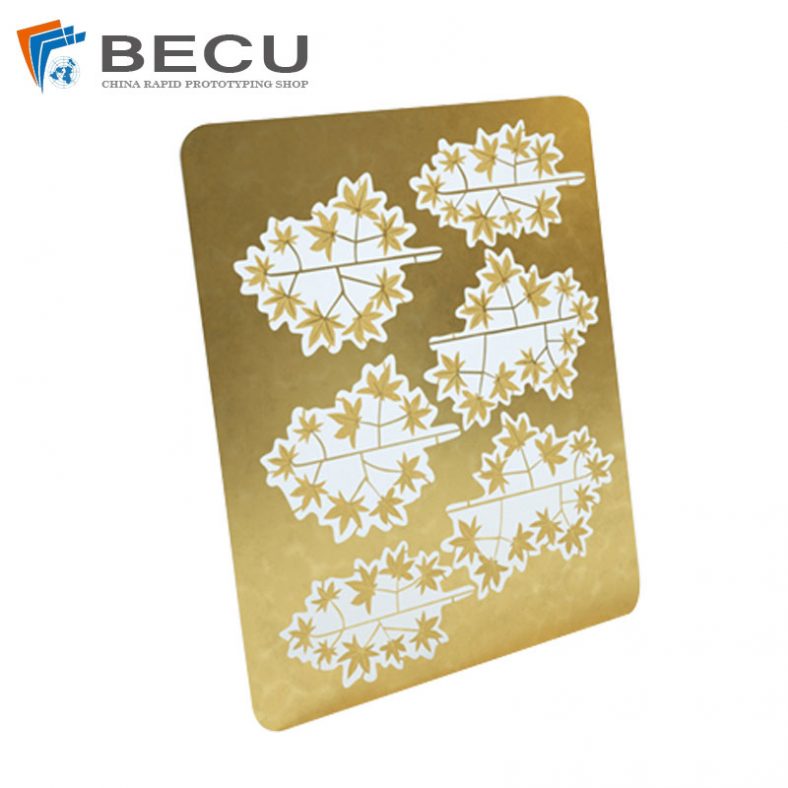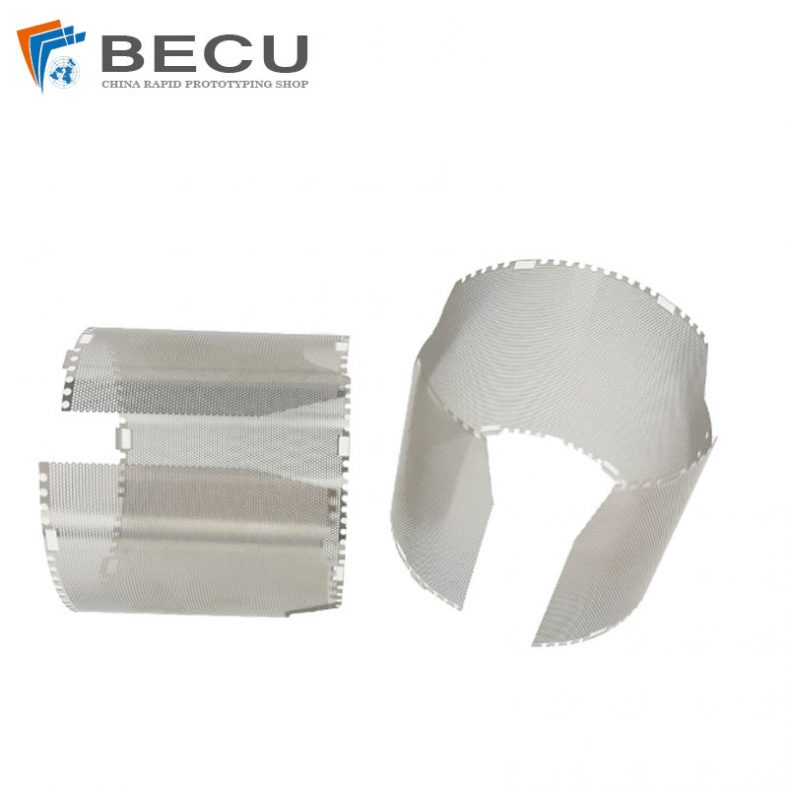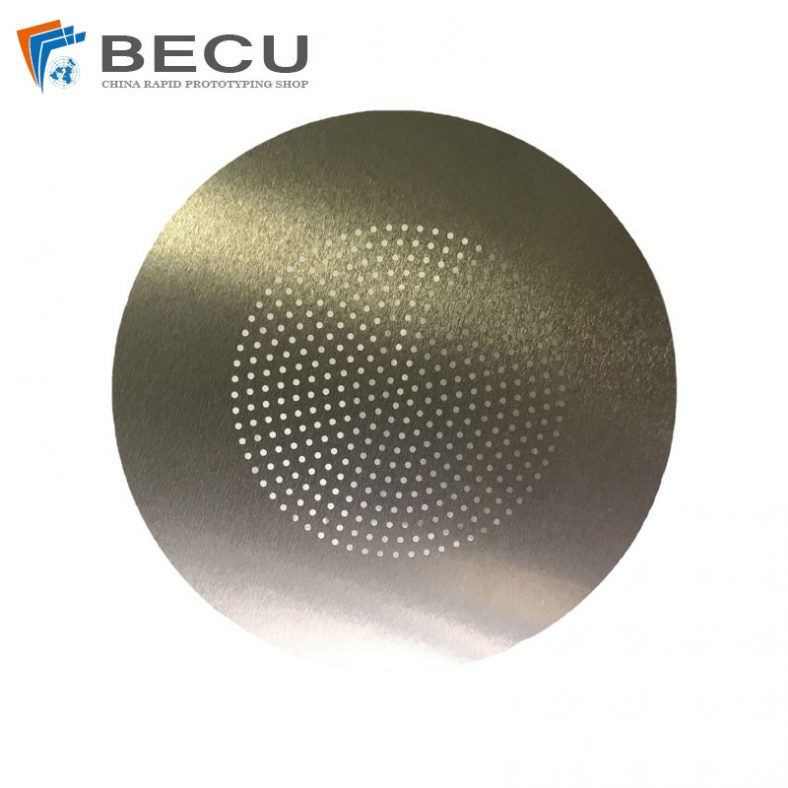
In the world of precision manufacturing, where the demand for intricate metal components pushes the boundaries of traditional techniques, hybrid etching emerges as a transformative approach. Imagine crafting turbine blades for jet engines that must withstand extreme temperatures without a single burr or stress crack, or fabricating microfluidic channels for medical diagnostics so fine they mimic the delicacy of biological vessels. These aren’t feats of futuristic engineering—they’re the everyday realities enabled by combining photochemical and electrochemical machining. This article delves deep into the synergy of these two processes, exploring how their union yields results that neither could achieve alone: unparalleled precision, versatility across materials, and efficiency that scales from prototypes to mass production.
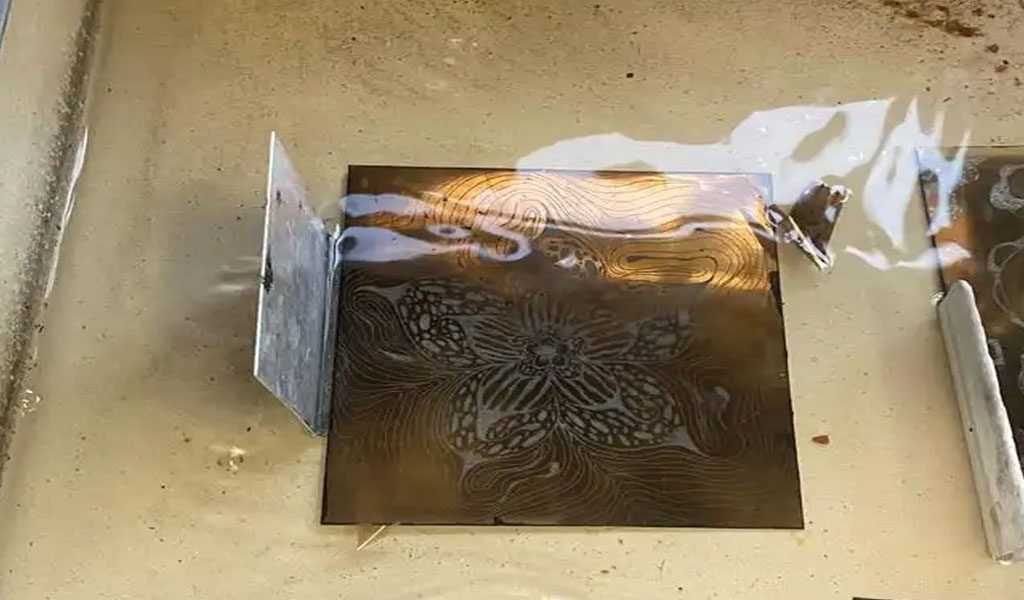
Photochemical etching, often simply called photo etching, has roots in the mid-20th century, born from the printed circuit board revolution. It uses light-sensitive resists and chemical etchants to dissolve away unwanted metal, layer by isotropic layer, creating flat, two-dimensional marvels with features as tiny as a few microns. On the other hand, electrochemical machining (ECM) harnesses electricity’s raw power, reversing electroplating to erode metal atom by atom through anodic dissolution. It’s the go-to for three-dimensional complexities, drilling deep holes or sculpting curved surfaces without the heat or force that warps lesser methods.But when you fuse these—hybrid etching—you get a process that’s greater than the sum: the flat precision of photo etching paired with ECM’s depth control, minimizing undercuts while maximizing throughput.
Why does this matter now, in 2025? Industries like aerospace, where lightweight titanium parts must endure hypersonic speeds, or biomedicine, demanding biocompatible implants with sub-millimeter tolerances, are clamoring for solutions that traditional CNC or laser cutting can’t deliver without compromise. Hybrid etching addresses these by eliminating mechanical stresses—no burrs, no heat-affected zones—and slashing tooling costs. A single phototool can iterate designs overnight, while ECM’s electrode shapes the third dimension on the fly. Costs plummet for complex geometries; what once required multi-step stamping or EDM now happens in one streamlined workflow.
Fundamentals of Photochemical Machining
Before we blend worlds, we must understand the ingredients. Photochemical machining (PCM), sometimes whispered as manufacturing’s “best-kept secret” in the 1960s, is a subtractive symphony where light and chemistry conduct the removal of metal. Picture a sheet of stainless steel, pristine and unyielding. To start, it’s meticulously cleaned—debris or oils could sabotage the resist’s adhesion—then laminated with a photoresist film, a polymer skin sensitive to ultraviolet light. This resist, often dry-film for its uniformity, coats both sides evenly, typically 0.001 to 0.005 inches thick, depending on the etch depth desired.
Enter the phototool: two sheets of high-resolution film bearing the negative image of your design—clear where metal stays, opaque where it goes. Aligned with micron precision under vacuum, the assembly basks in UV light from mercury lamps or LEDs. Exposed areas polymerize, hardening like a digital tattoo. Development follows, a rinse in sodium carbonate solution that washes away the unexposed resist, revealing the metal beneath in patterns as intricate as a microchip’s veins. Now, the etchant takes center stage—usually ferric chloride for ferrous metals, heated to 120-140°F and sprayed at high pressure from nozzles above and below. This isotropic assault dissolves metal laterally and vertically at rates of 0.0005 to 0.001 inches per minute per side, carving semicircular profiles unless tenting techniques shield sidewalls.
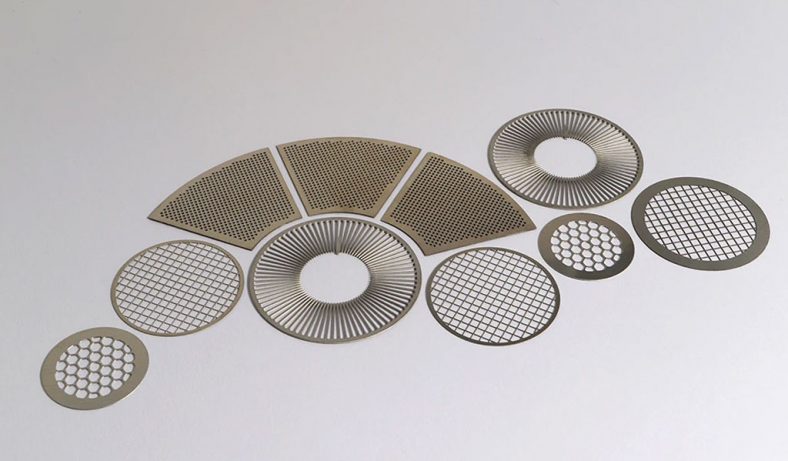
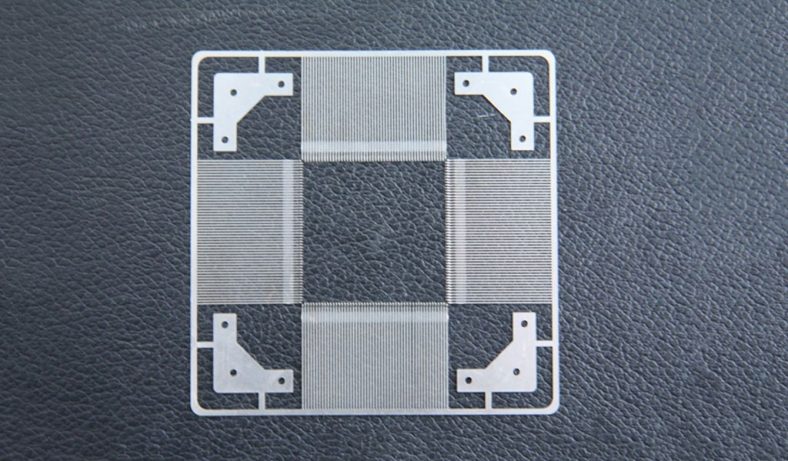
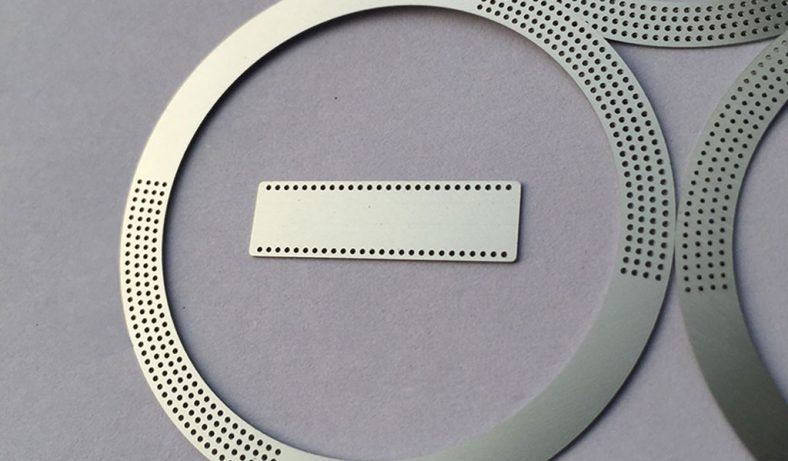
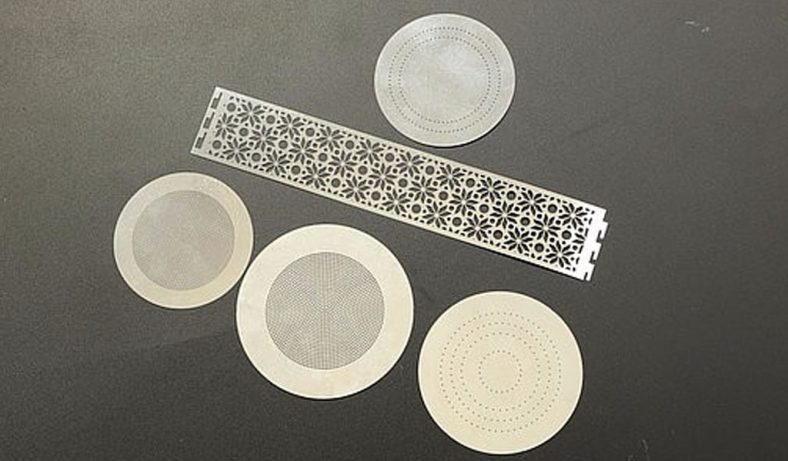
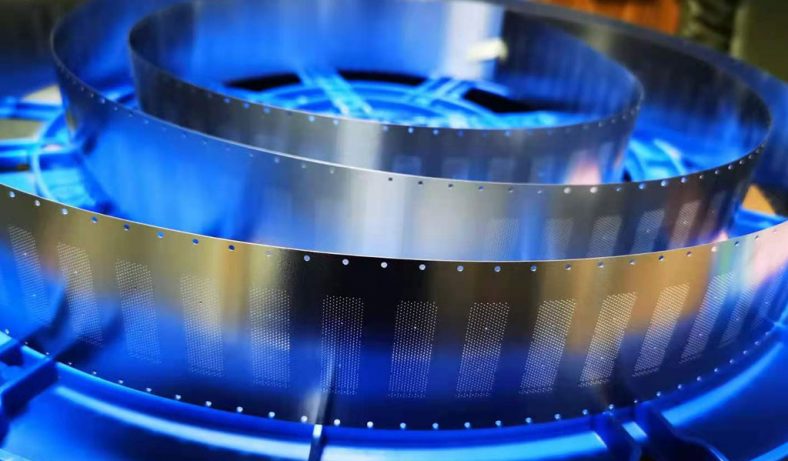
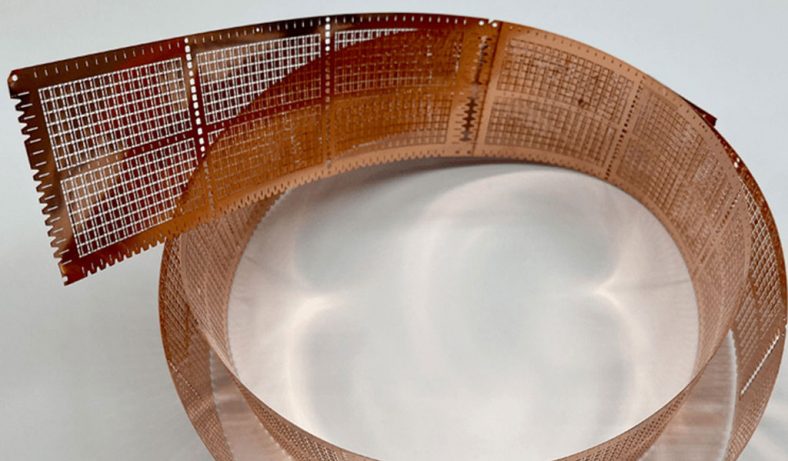
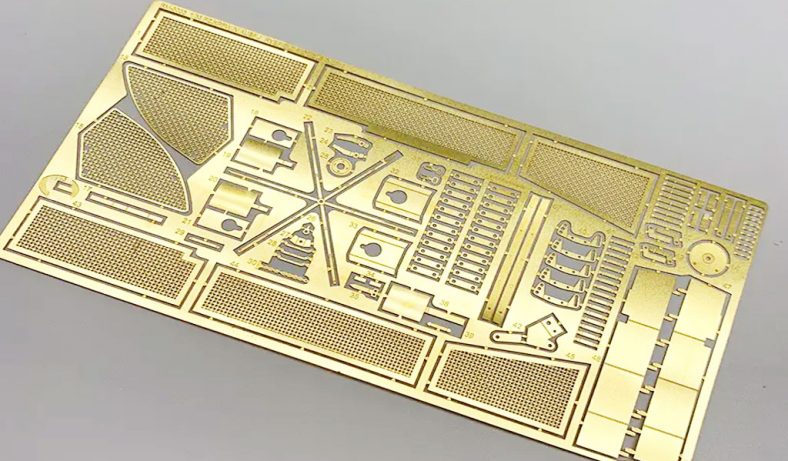
The beauty lies in its gentleness. No hammers, no lasers—just chemistry eating away at exposed atoms, leaving burr-free edges and unaltered grain structures. Stripping the resist with a solvent bath reveals the part: a flat foil with holes, slots, or textures, tolerances holding ±0.0005 inches for thicknesses up to 0.020 inches. From EMI shields in consumer electronics to flow field plates in fuel cells, PCM shines for thin-gauge work—0.001 to 0.060 inches—across alloys like Kovar, Inconel, and aluminum. Yet, its isotropy limits depth-to-width ratios to about 1:1 without multi-step masking, and etchant regeneration adds operational heft. Still, at $0.15-$0.20 per square inch for simple steel parts, it’s a bargain for complexity.
This process, refined since its PCB origins, thrives on scalability. Benchtop units for R&D give way to conveyor-fed lines churning thousands of sheets hourly. Companies like Masteretch embody this, their automated systems minimizing downtime while handling wide formats for architectural meshes. But for depths beyond shallow channels or curves defying flat-sheet logic, PCM whispers: “Call a friend.” That friend? Electrochemical machining.
Fundamentals of Electrochemical Machining
If PCM is the artist with a fine brush, electrochemical machining (ECM) is the sculptor wielding lightning. Developed in the 1950s for aerospace’s hard-to-machine superalloys, ECM flips electroplating on its head: the workpiece becomes the anode, dissolving under a cathode tool in an electrolyte bath. No sparks, no friction—just controlled corrosion at atomic scale.
Setup is deceptively simple yet precise. The tool, often graphite or copper shaped inversely to the desired feature, hovers 0.002-0.010 inches from the anode, shaped by CAD and machined separately. Electrolyte—sodium chloride or nitrate solution, flowing at 10-50 gallons per minute—fills the gap, conducting current while flushing sludge. A DC power supply delivers 5-25 volts, pushing 100-1000 amps; current density (20-200 A/in²) dictates removal rates up to 0.01 inches per minute. At the anode, metal oxidizes: for iron, Fe → Fe²⁺ + 2e⁻; ions complex with electrolyte, dissolving away. The cathode evolves hydrogen, but its form stays pristine—no wear, thanks to the gap’s Faraday equilibrium.
This non-contact dance yields anisotropic etching, ideal for deep cavities or turbine blades. Profiles mirror the tool exactly, with overcuts as low as 0.001 inches, and surface finishes Ra 10-20 µin. Hardness? Irrelevant—Inconel yields like aluminum. No recast layers, no thermal gradients; parts emerge stress-free, ready for assembly. Variants abound: pulsed ECM (PECM) for microstructures, electrochemical grinding (ECG) blending abrasion for ultra-smoothness.
Yet, ECM demands vigilance. Electrolyte pH drifts, risking passivation; flow must be laminar to avoid turbulence-induced irregularities. Power consumption is voracious—up to 50 kWh per cubic inch removed—and initial tooling, while durable (millions of parts per electrode), requires investment. It’s mass-production royalty: jet engine holes, medical implants, automotive dies. Voxel Innovations notes PECM’s edge over ECM for micro-features, pulsing to localize dissolution. But for standalone depth, ECM reigns. Alone, it lacks PCM’s flat-sheet economy; together, they conquer.
The Synergy: Principles of Hybrid Etching
Hybrid etching isn’t mere juxtaposition—it’s alchemy, where PCM’s planar precision seeds ECM’s volumetric prowess. Conceive it as a two-act play: Act One, photochemical masking etches broad, flat features on sheet stock, defining outlines and shallow textures. Act Two, the part transfers to an ECM cell, where electrodes sculpt depths, undercuts, or 3D contours without disturbing the photo-etched base. The result? Components with hybrid geometries—think a flat titanium mesh deepened into microfluidic manifolds, tolerances blending ±0.0002 inches laterally with 0.005-inch depths.
Mechanistically, synergy stems from complementary dissolution. PCM’s isotropic chemistry excels at uniform thinning, but hybrids mitigate undercutting by ECM’s directional field lines, confined by the gap. Etchants and electrolytes? Tailored: ferric chloride for photo stages on copper, then sodium nitrate for ECM on the same part, minimizing residue. Process flow integrates seamlessly—post-PCM rinse preps surfaces for electrode contact, avoiding resist interference. Pulsing in hybrid PECM variants sharpens edges further, as Voxel’s comparisons show: 50% faster than solo ECM for complex hybrids.
Advantages cascade. Cost? PCM’s low tooling ($500 phototools) offsets ECM’s electrodes, halving per-part expense for hybrids versus sequential stamping-EDM. Speed? Batches etch in hours, not days. Versatility? Handles 0.001-0.100-inch thicknesses, ferrous to refractory alloys. From Precision Micro’s insights, hybrids excel in aspect ratios >5:1, unattainable solo. Challenges persist—inter-process alignment demands fixturing—but simulations via COMSOL model fields, predicting outcomes. In essence, hybrid etching democratizes precision: what was bespoke becomes routine, fueling innovations in renewables and beyond.
Comparative Analysis: Photochemical vs. Electrochemical vs. Hybrid
To grasp hybrid’s superiority, contrast the trio. Standalone PCM devours flat simplicity: rapid for meshes, but depths plateau at half-thickness, undercuts ballooning 50% beyond lines. ECM dives deep, but flat features require broad electrodes, inflating costs 2-3x for sheets. Hybrids? They cherry-pick: PCM for breadth, ECM for depth, yielding 30-40% material savings and 20% tolerance gains.
Consider metrics. Removal rates: PCM 0.001 in/min isotropic; ECM 0.005-0.02 in/min anisotropic; hybrids average 0.003 in/min, optimized per zone. Surface finish: All Ra <20 µin, but hybrids minimize PCM’s sidewall taper via ECM polishing. Tooling: PCM $0.15/in²; ECM $5k+ electrodes; hybrids amortize to $0.20/in². Scalability: PCM for 10k+ sheets; ECM for 1k+ parts; hybrids bridge prototypes to volume.
Real-world? Aerospace foil vs. blade: PCM solos foil cheaply; ECM blades expensively; hybrid both in one flow. From Stack Exchange debates, electro edges safety, but photo precision wins volume—hybrids harmonize both.
| Parameter | Photochemical Machining (PCM) | Electrochemical Machining (ECM) | Hybrid Etching (PCM + ECM) |
|---|---|---|---|
| Primary Mechanism | Isotropic chemical dissolution via photoresist and etchant | Anisotropic anodic dissolution via electrode and electrolyte | Sequential: Isotropic planar + anisotropic volumetric |
| Material Removal Rate | 0.0005-0.001 in/min per side | 0.005-0.02 in/min | 0.002-0.01 in/min (zone-dependent) |
| Aspect Ratio Capability | 1:1 max (shallow channels) | >10:1 (deep cavities) | 1:1 to 8:1 (blended) |
| Thickness Range | 0.001-0.060 in (optimal <0.020 in) | 0.010-0.500 in | 0.001-0.200 in |
| Tolerance (±) | 0.0005-10% thickness | 0.001-0.005 in | 0.0003-0.003 in |
| Surface Finish (Ra) | 10-30 µin | 10-20 µin | 5-15 µin |
| Tooling Cost | Low ($500 phototool) | Medium-High ($2k-10k electrode) | Medium ($1k-5k combined) |
| Production Volume Suitability | High (10k+ sheets/hr) | Medium (1k+ parts/run) | High (5k+ hybrid parts) |
| Stress/Heat Impact | None | None | None |
| Best For | Flat 2D parts, meshes, prototypes | 3D contours, holes, hard alloys | Complex hybrid geometries |
This table, informed by Voxel Innovations and Precision Micro data, underscores hybrids’ edge: balanced metrics for superior outcomes.
Process Parameters and Optimization
Mastering hybrids demands dialing parameters like a maestro. Start with PCM: etchant concentration (40-50% FeCl₃ for steel) and temperature (110-130°F) boost rates 20%, but over 140°F risks resist delamination. Exposure energy (50-100 mJ/cm²) ensures sharp lines; under-exposure blurs edges 10-20 µm. For ECM follow-on, gap width (0.005 in) and flow rate (20 gpm) control localization—turbulence spikes overcut 15%.
Optimization? Taguchi methods or ANOVA, as in Frontiers’ PCM studies, minimize variance. For hybrids, DOE tests inter-process interactions: post-PCM surface roughness affects ECM initiation, so electropolish bridges them, cutting cycle time 15%. Voltage pulsing (10-100 Hz) in PECM hybrids refines resolution to 5 µm. Material-specific: titanium needs sulfate electrolytes to avert passivation; copper, chlorides for speed.
Sustainability factors in—etchant recycling recovers 90% via filtration, slashing waste. Software like EtchMaster simulates flows, predicting 95% yield. Case: Inconel hybrids for turbines—optimized at 15V, 30 gpm—hit 0.002 in tolerance, 25% faster than solo ECM.
| Material | PCM Etchant | ECM Electrolyte | Optimal Temp (°F) | Removal Rate (in/min) | Hybrid Optimization Tip |
|---|---|---|---|---|---|
| Stainless Steel | FeCl₃ (45%) | NaCl (20%) | 120 / 100 | 0.001 / 0.008 | Pulse ECM to reduce undercuts by 30% |
| Titanium | H₂SO₄ + HF (10%) | NaNO₃ (15%) | 110 / 90 | 0.0008 / 0.006 | Pre-PCM anodize for adhesion boost |
| Copper | CuCl₂ (40%) | NaBr (25%) | 130 / 110 | 0.002 / 0.015 | Hybrid flow: 25 gpm to flush residues |
| Aluminum | NaOH (30%) | NaCl (18%) | 140 / 95 | 0.0015 / 0.010 | Avoid >120°F in PCM to prevent pitting |
| Inconel | FeCl₃ + HCl (50%) | KNO₃ (20%) | 115 / 85 | 0.0006 / 0.004 | ANOVA for current density (50 A/in²) |
Drawn from scholarly parametric studies, this table guides tuning for peak performance.
Materials Compatibility and Selection
Hybrids thrive on versatility, etching nearly any conductive metal without prejudice to hardness. Ferrous staples like 304 stainless—ubiquitous in sensors—etch crisply in FeCl₃, then deepen via NaCl ECM for valve seats. Refractories like titanium, aerospace’s darling, demand HF blends in PCM to breach oxide layers, followed by nitrate ECM for implant pores. Copper alloys, electronics’ lifeline, zip through CuCl₂ at 0.002 in/min, hybrids adding 3D vias without warping.
Non-ferrous challenges? Aluminum’s amphoterism suits NaOH PCM, but hybrids incorporate ECG for burrless edges. Nickel-based superalloys (Inconel 718) resist solo PCM’s sluggishness (0.0003 in/min), but ECM’s 0.005 in/min accelerates, hybrids yielding turbine foils 40% lighter. Emerging: shape-memory Nitinol for stents—hybrids etch patterns then form, preserving superelasticity.
Selection hinges on conductivity (>10% IACS), etch rate, and post-process integrity. Hybrids minimize intermetallics; e.g., brass PCM avoids zinc depletion, ECM polishes. From Elcon’s repertoire, molybdenum hybrids for RF shields hit 0.0001 in tolerances. Table below rates compatibility.
| Material | PCM Etch Rate (in/min) | ECM Etch Rate (in/min) | Hybrid Suitability (1-10) | Key Applications | Challenges Mitigated by Hybrid |
|---|---|---|---|---|---|
| Stainless 304 | 0.001 | 0.010 | 10 | Sensors, filters | Undercut control (ECM directional) |
| Titanium Gr2 | 0.0007 | 0.005 | 9 | Implants, aerospace | Passivation (HF + nitrate combo) |
| Copper 110 | 0.0025 | 0.018 | 10 | Circuits, heat sinks | Oxidation (pulsed ECM) |
| Aluminum 6061 | 0.0012 | 0.008 | 8 | Enclosures, meshes | Pitting (NaOH + flow optimization) |
| Inconel 718 | 0.0004 | 0.003 | 9 | Turbines, valves | Sluggish rate (staged dissolution) |
Scores reflect ease, speed, and quality from industry benchmarks.
Applications Across Industries
Hybrids illuminate sectors craving precision without compromise. Aerospace: GE’s fuel nozzles—PCM etches flow channels, ECM bores injectors, cutting weight 15% while boosting efficiency 2%. From Voxel, PECM hybrids machine cooled blades, tolerances ±0.001 in at 0.200 in depths.
Medical: Stents from Nitinol hybrids—photo patterns lattices, ECM expands lumens, biocompatibility intact. Precision Micro’s microfluidic plates for diagnostics: hybrids etch serpentine paths 0.005 in wide, enabling lab-on-chip revolutions.
Electronics: EMI shields with 3D vents—PCM grids, ECM depths for airflow, as Tech-Etch delivers. Renewables: Bipolar plates for electrolyzers, hybrids from stainless, channeling hydrogen at 50% less cost than stamped.
Automotive: Sensor meshes in EV batteries—copper hybrids endure 500°C cycles. Defense: IR filters with undercut baffles, hybrids from molybdenum. Each application leverages synergy: PCM’s economy for volume, ECM’s depth for function.
Case: Switzer’s flow plates—hybrids etch 0.010 in features on 0.060 in titanium, 30% faster than laser, zero distortion.
Case Studies: Real-World Implementations
Dive deeper with tales from the forge. Case 1: Voxel Innovations’ PECM-PCM hybrid for aerospace brackets. Challenge: 0.030 in aluminum with 0.100 in blind pockets. Solution: PCM outlines, PECM pockets at 50 Hz pulse. Result: 25% cycle reduction, Ra 12 µin, cost down 35% vs. EDM. Lessons: Pulsing curbs stray currents.
Case 2: Precision Micro’s medical mesh. Nitinol sheet, 0.002 in thick, with 0.050 in depth weaves. PCM tents for isotropy control, ECM deepens. Yield: 98%, tolerances ±0.0003 in. Impact: 10k units/month for vascular filters, burr-free for implantation.
Case 3: Elcon’s RF components. Moly hybrids: photo slots, ECM vias. From prototype to 50k run in weeks, saving $200k in tooling. Metrics: 0.0005 in lines, 40:1 aspect.
These, echoed in scholarly reviews, prove hybrids’ ROI: 20-50% efficiency gains.
Conclusion:Future Directions and Innovations
No rose without thorns. Alignment: PCM’s flat etch warps subtly; solution—fiducials for ECM fixturing, laser-guided to 5 µm. Etchant carryover: Residues foul electrolytes; rinse with DI water + ultrasonics, pH-neutral. Scale-up: PCM volumes clash with ECM’s singles; modular lines, as Masteretch’s, batch 100 sheets to 10k.
Cost creep: Hybrids add steps; offset via automation—robotic transfer cuts labor 40%. Safety: Dual chemistries demand segregated zones; ECM’s hydrogen venting, PCM’s fume hoods. From Conard’s pitfalls, Nadcap exemptions ease certification.
Innovations: AI-monitored gaps in ECM, adaptive UV in PCM. Future-proofing hybrids means embracing these, turning hurdles to highways.
As 2030 looms, hybrids evolve. Nano-scale: MACE-inspired catalysts for 100 nm features, blending photo with metal-assisted ECM. Sustainability: Bio-etchants from plant acids, 80% recyclable. AI integration: Real-time spectroscopy tunes rates, boosting yield 15%.
Quantum dots in resists for sub-micron PCM; solid-state electrolytes for dry ECM. xAI’s edge? Simulating molecular dissolution for predictive design. Hybrids will hybridize further—laser priming for ultra-localization. The horizon? Ubiquitous, green, atomic-precision fabrication.
Hybrid etching—photochemical’s grace wed to electrochemical’s might—ushers an era of superior results: precision unbound, costs tamed, applications endless. From tables to turbines, it proves fusion’s power. As industries pivot to smarter, lighter worlds, this technique stands ready. Embrace it; etch the future.